
Key takeaways
- Position the machine between you and the main noise source, such as a door or window.
- Start at a low volume and raise it slowly until the disturbance is covered.
- Give it a week or two; many sleepers adapt gradually.
- Keep it on a hard, flat surface so it does not vibrate.
- Clean vents gently with a dry cloth if the maker advises.
For most people under a $100 cap, the LectroFan Classic or EVO is the best all-round white noise machine for sleep because it gives precise volume control and non-looping fan and noise sounds; the Yogasleep Dohm Classic suits anyone who prefers a real mechanical fan sound; and the Hatch Restore 3 is the smart, feature-packed option that reviewers praise but that sits above this budget. Which one fits depends on whether you want pure sound masking, a bedside routine with light and alarms, or a portable unit for travel.
Our top picks
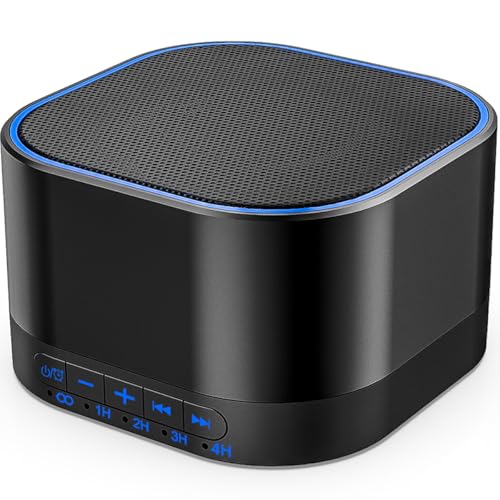


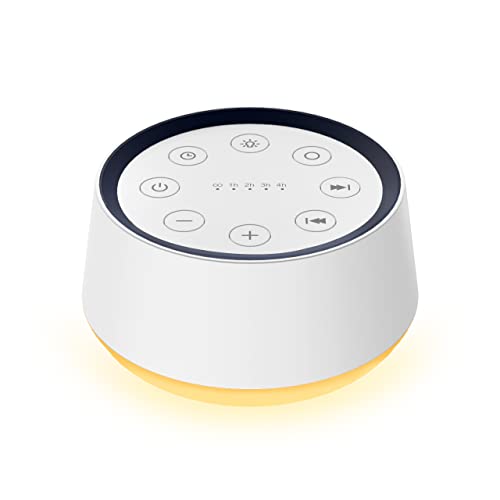
As an Amazon Associate we earn from qualifying purchases at no extra cost to you.
White Noise Machines at a Glance
| Product | Best for | Key stated features | Limits |
|---|---|---|---|
| LectroFan Classic | Simple, reliable masking | Maker lists 20 digital sounds (10 fan, 10 noise variations), a timer, no app, fine volume steps | No smart features; some retailers show it as unavailable, so confirm stock and the model’s feature list |
| LectroFan EVO | Sound variety and precise volume | Maker lists 22 non-looping sounds (fan, noise and ocean), a timer and a headphone jack | Costs more than the Classic |
| Yogasleep Dohm Classic | People who like a natural fan sound | Mechanical fan inside a housing, adjustable tone and volume; real fan, two speeds and adjustable tone, no digital loop, 1-year limited warranty per the maker | Single fan sound only and may be too quiet to mask a loud roommate |
| SNOOZ White Noise Machine | Fan-based sound with app control | Real fan mechanism with Bluetooth app scheduling, per reviewers; fan sound only | One sound type; app dependence |
| Hatch Restore 3 | Wind-down routines, sunrise alarm, light | Sleepopolis and others name it best overall for features such as sound, light and alarms; some content may need a subscription | Reported above this budget; poor value if you only want sound |
How White Noise Helps and What It Cannot Do
A sound machine masks sudden background noises such as traffic, voices or a creaky pipe by giving your ears a steady, uniform sound to focus on. It does not cancel noise the way noise-cancelling headphones do, and it does not treat sleep disorders. If you have trouble sleeping most nights, snore loudly, wake gasping or feel excessively tired during the day, speak to a doctor. A machine is an environmental tweak, not a medical solution.
Sound Types Explained
White noise
Evenly spread across frequencies, similar to static. Good for masking a wide mix of sounds, though some find it harsh.
Pink and brown noise
Pink noise emphasises lower frequencies and is described by many users as softer, like steady rain. Brown noise goes deeper still, like a distant rumble. Many machines, including the LectroFan EVO, offer multiple colors so you can try a few.
Fan sounds
Fan-based units, either real or simulated, create a familiar whooshing sound. Mechanical designs such as the Dohm produce a natural, non-repeating sound, according to the maker and reviewers.
Nature and ambient tracks
Ocean waves, rainfall or forest tracks are often looped digital recordings. Some listeners notice the loop point, which can be distracting. Machines with long loops or generated noise avoid this.
Pick X If You Need Y
| If you want… | Pick | Why |
|---|---|---|
| Straightforward noise masking with fine volume control | LectroFan Classic | Electronic sounds with fine volume steps; some reviewers rate it highly for the price |
| More sound options and a timer | LectroFan EVO | 22 sounds, a timer and headphone jack per the maker |
| A real fan sound with no electronics to learn | Yogasleep Dohm Classic | Real fan, no app, adjustable tone and speed |
| App control with a fan sound | SNOOZ | Real fan with app features |
| A full bedside routine with light and alarm | Hatch Restore 3 | Top overall in several outlets but priced higher |
| A device for travel | Compact USB or battery-powered unit | Smaller size; choose one with a stated battery life |
Features That Matter
Volume range and loudness
Reviewers measure output in decibels, but results vary by distance and room. A machine should be able to go loud enough to mask your noise problem while still being comfortable at a low setting. Volume that covers a loud roommate may not be needed if you only want to hide small sounds.
Loop-free sound
If you are sensitive to repetition, choose a machine that generates noise rather than playing a short recording. Mechanical fans and generated electronic noise both avoid obvious loops.
Timer and auto-off
Some sleepers want the sound to run all night; others prefer a timer. Check whether the maker lists a timer, memory of the last setting and a headphone jack.
Power source
Plug-in units suit a bedside table. Battery or USB rechargeable options suit travel or a baby bag. Look at the maker’s stated battery life and charging method.
Size and placement
Mechanical machines tend to be larger. Place the unit on a stable surface, not on a bed or in a crib, and keep the cord out of reach.
Using a Sound Machine Around Babies and Children
If the machine is for an infant or child, be conservative. Pediatric groups have raised concerns about loud white noise near young ears, so keep the volume low, place the machine as far from the child’s head as the cord allows, and never put it inside a crib or bassinet. Follow the manufacturer’s manual, and ask your pediatrician about safe sound levels and whether a machine suits your child. For any electrical product, keep cords out of reach and stop using the unit if it feels hot or shows damage.
Placement and Setup Tips
- Position the machine between you and the main noise source, such as a door or window.
- Start at a low volume and raise it slowly until the disturbance is covered.
- Give it a week or two; many sleepers adapt gradually.
- Keep it on a hard, flat surface so it does not vibrate.
- Clean vents gently with a dry cloth if the maker advises.
Budget Tiers
Entry level
Basic electronic machines and travel units with a handful of sounds. They are fine for light masking, but some have short loops.
Mid budget
The Dohm Classic and LectroFan models sit here. Reviewers value the quality of sound and the build more than extra features.
Premium
Hatch Restore 3 and similar smart devices add apps, lights, routines and alarms. Several reviewers say they are poor value if you only need sound.
Alternatives
- A regular fan or air purifier: Provides a mechanical hum and moves air, though sound quality is not tunable.
- Smart speaker with ambient sound: Convenient, but speaker quality and loops vary.
- Earplugs or sleep earbuds: Block rather than mask; some are designed for side sleepers.
- Acoustic fixes: Door sweeps, rugs and heavy curtains reduce noise at the source.
What Reviewers Tend to Agree On
- LectroFan models are praised for volume control and variety.
- The Dohm is liked for its natural sound but can be too quiet for loud environments.
- Hatch Restore 3 is a favorite for features rather than value.
- Many outlets are affiliate-driven, so look for consistent patterns across several.
Getting the Most From a Sound Machine
Placement and volume do more than the model name. A machine across the room facing the door tends to mask hallway noise better than one pressed against your pillow, and it is gentler on your ears. If street noise is the issue, put the speaker nearer the window. Many people find that a slightly lower, steadier sound works better than a loud one, because a loud setting can itself become a distraction.
Consider the household as a whole. If one person likes a fan hum and the other prefers soft rain, a machine with several sounds and a headphone or earbud option solves the argument. Light sleepers sometimes pair a machine with heavier curtains and a door seal, which helps with the sounds a machine cannot cover, such as a neighbor’s bass. If noise is the result of a hearing issue such as ringing in the ears, speak to a doctor or audiologist, because masking sound is not a treatment.
Power and travel
Plug-in machines draw little power and can run all night. Travel models with USB charging fit a power bank, which helps in hotels. Keep the cord short and tucked behind furniture, and place the unit where it cannot be knocked into the bed.
Frequently Asked Questions
Is white noise safe to sleep with every night?
Many adults use it nightly without issue, but keep the volume at a comfortable level and use the lowest setting that works. If you notice ear discomfort, ringing or any change in your hearing, stop using it and speak to a doctor.
What is the difference between white, pink and brown noise?
They differ in how energy is spread across frequencies. White is bright and hissy, pink is softer, and brown is deep and rumbly. Which is best is personal, so try a machine that offers more than one.
Can I use a white noise machine for a baby?
Ask your pediatrician first. Keep the machine well away from the crib, at a low volume, and never place it in the sleep space. Follow the maker’s instructions.
Should I choose a fan-based or electronic machine?
Fan-based units give a natural, non-looping sound, while electronic machines offer more variety and finer control. Both work for masking, so pick the sound you find most relaxing.
How loud should a white noise machine be?
Loud enough to mask disturbances but still comfortable. Start low and increase slowly, and avoid placing it right next to your ear.
Do I need an app-connected machine?
Not for basic masking. App features add routines, schedules and lights, which some enjoy, but a simple machine without Wi-Fi is easier to set up and has fewer things to go wrong.


