Key takeaways
- Coated wire: Strong and ventilated, but thin wires can leave lines on folded knits. Lay shelf liners over the wires.
- Laminate or particleboard: Flat surfaces and a finished look, but sensitive to moisture and heavier to handle.
- Steel tubing: Used in freestanding racks; check the stated load per shelf.
- Fabric: Lightweight and inexpensive; best for sweaters and accessories, not heavy loads.
For most closets with a $100 ceiling, a no-drill freestanding or hanging organizer from Whitmor suits renters and quick fixes, a ClosetMaid ShelfTrack wire system suits owners who want an adjustable, wall-mounted setup (the full 5-to-8-foot kit usually sits above this cap, so smaller sections or parts are the budget route), and a larger Rubbermaid Configurations kit is the step up that reviewers often name the best overall but that usually sits at or above this cap. Your choice should follow the closet’s width, whether you may drill, and how much hanging versus shelf space you actually need.
Our top picks


As an Amazon Associate we earn from qualifying purchases at no extra cost to you.
Closet Organizers at a Glance
| Product | Best for | Key stated features | Limits |
|---|---|---|---|
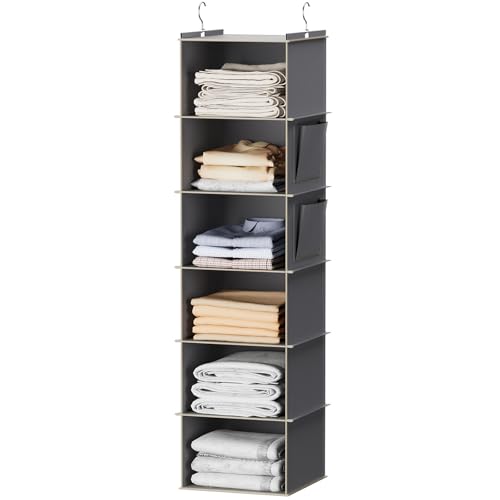
| Whitmor 6-Section Hanging Organizer | Renters, no-tool upgrades | Hangs from the rod, fabric shelves, no drilling; renter-friendly | Light-duty; shelves sag if overloaded |
| Whitmor 5-Tier Closet Organizer | Hall and small closets | Freestanding shelf tower with metal frame and plastic connectors; the maker lists about 67.9 inches tall; no installation | Freestanding units can wobble if loaded unevenly |
| Whitmor 4-Tier Closet Shelf | Lowest-cost shelving | Wire shelves with resin end connectors per the maker; no drilling | Some reports of wobble under heavier loads |
| ClosetMaid ShelfTrack adjustable wire kit | Owners on a budget who want a mounted system | Adjustable wire shelving and hang rods on a wall track; the 5-to-8-foot kit is the common size | Requires wall mounting; wire marks soft items; the full kit is often priced above this cap |
| ClosetMaid SuiteSymphony | A furniture-like look | Laminate towers with optional drawers, for closets roughly 4 to 10 feet wide per retailer listings | Often above this budget when you build a full system |
| Rubbermaid Configurations Deluxe | Broad closets from about 4 to 8 feet | All-in-one wire kit with shelves and telescoping rods; no cutting needed, a drill is required for mounting | Typically above the cap; wall mounting required |
Start With Measurements
Before browsing, measure the closet width, depth and height, and the rod height. Note any obstacles such as baseboards, door tracks or light fixtures. Many kits are sold by closet width range, such as 4 to 8 feet for the Rubbermaid Configurations Deluxe. Freestanding units are sold by their own dimensions, so make sure they fit inside the closet or alongside it.
Then sort your belongings. Count how many long garments, short garments, folded items, shoes and bags you own. A closet with mostly shirts needs double hanging; one with sweaters and jeans needs shelves.
System Types
Hanging fabric organizers
These hang from your existing rod and add cubbies or shelves without tools. They are inexpensive and removable, which suits rentals. They are not meant for heavy items such as stacks of denim, and the cubbies can sag if overloaded.
Freestanding shelving units and racks
These stand on the floor and need no drilling. They can be moved with you, and many include an adjustable shelf layout. They take floor space and may tip if overloaded or if the floor is uneven, so keep heavy items low.
Wall-mounted wire systems
Systems like ClosetMaid ShelfTrack attach to the wall with a top track and vertical standards, letting you adjust shelf and rod heights. They offer the highest capacity for the cost. Installation needs a drill, a stud finder and anchors, and they must be installed according to the manual’s load limits.
Laminate or wood-look modular systems
Kits such as SuiteSymphony offer a furniture-like appearance and drawers. They can be more expensive than wire and need careful assembly, but they hide clutter better and are gentler on fabrics.
Pick X If You Need Y
| If you want… | Pick | Why |
|---|---|---|
| No holes in the walls | Whitmor hanging organizer or freestanding shelf | Installs without tools |
| A tall, narrow unit for a hall closet | Whitmor 5-Tier | Slim freestanding tower; confirm shelf count and height on the maker’s page |
| Adjustable shelves and rods that you can reconfigure | ClosetMaid ShelfTrack | Standards and brackets allow changes later |
| A system that covers a wide reach-in closet | Rubbermaid Configurations Deluxe | Kit designed for 4 to 8 foot closets |
| A cleaner, cabinet-like appearance | ClosetMaid SuiteSymphony | Laminate parts and drawers |
Installation and Safety
If you install a wall-mounted system, follow the maker’s manual and mount into studs or use the anchors it specifies. Stud locations and wall materials differ, so use a stud finder, and consider asking a handyperson if you are unsure. Respect the stated shelf and rod load ratings, because overloading can pull a track off the wall and cause injury. Keep heavy items at lower levels.
Freestanding units should sit level and, if the maker provides it, be secured to the wall to prevent tipping. This matters in homes with children, who might climb shelves. Keep closets away from heat sources, and do not hang clothes over light fixtures or heater vents. If you find an outlet or light fixture in the closet, follow local codes about storage clearance and ask an electrician if you are unsure.
Layout Ideas by Closet Type
Reach-in closet
Use double-hang rods for shirts and pants on one side and a shelf tower on the other. Wire kits adapt well here. Use the floor space for shoe racks or bins.
Walk-in closet
Wall-mounted systems let you use all three walls. Allow room for the door swing and walking space. Budget buyers often start with one wall and extend later.
Hall or coat closet
A slim freestanding unit with adjustable shelves handles hats, bags and linens. Consider hooks on the door.
Rental closets
Hanging organizers, over-the-door racks and freestanding shelves leave no marks. Remove them when you move.
Materials
- Coated wire: Strong and ventilated, but thin wires can leave lines on folded knits. Lay shelf liners over the wires.
- Laminate or particleboard: Flat surfaces and a finished look, but sensitive to moisture and heavier to handle.
- Steel tubing: Used in freestanding racks; check the stated load per shelf.
- Fabric: Lightweight and inexpensive; best for sweaters and accessories, not heavy loads.
Budget Tiers
Entry level
Fabric hanging shelves and basic racks. They give immediate improvement for little effort, though capacity is modest.
Middle
Smaller adjustable wire sections such as ShelfTrack parts, and mid-size freestanding shelves with metal frames. Reviewers say wire systems offer a good balance of cost and capacity, though full kits for wide closets can exceed this cap.
Near or above the cap
Complete kits such as Rubbermaid Configurations Deluxe, and laminate systems. Outlets often rank these highest, but they can exceed $100 depending on size.
Alternatives
- Garment rack: A standalone rail when a closet is missing or too small.
- Dresser or wardrobe: Adds drawers instead of rod space.
- Over-the-door organizers: Use the back of the door for shoes or accessories.
- Slim hangers and bins: Cheap ways to add capacity before buying a system.
What Reviewers Tend to Say
- Rubbermaid Configurations kits and ClosetMaid ShelfTrack kits are both common wire-system choices; compare listed shelf space and mounting hardware.
- Freestanding Whitmor units are praised for convenience but can wobble with heavy loads.
- Several roundups are affiliate-driven, so look for agreement across more than one source.
Planning the Layout Before You Buy
A good closet plan starts with what you reach for most. Place everyday clothing between hip and shoulder height, keep rarely used items on the top shelf, and use the floor for shoes or bins. Short garments such as shirts and folded trousers can share a double-hang section, which nearly doubles rod space in the same width. Long coats and dresses need a single tall section, so measure the longest item you own before deciding how much double-hang to include.
Budget buyers often over-buy shelves and under-buy rod space. Count how many hangers you use now and leave room to grow by about a fifth. If you have many accessories, small bins and hooks on the door often help more than additional shelves. Slim non-slip hangers can free a surprising amount of room without any new hardware, which is worth trying before you purchase a system.
Cleaning and upkeep
Wipe wire with a damp cloth, vacuum dust from shelves, and refit any shelf clips that have loosened. Do not mix damp clothes into a closed closet, since moisture encourages mildew. If you notice musty smells or discolored walls, address the moisture source and ask a professional if it looks serious.
Frequently Asked Questions
Do I need to drill to install a closet organizer?
Not always. Hanging and freestanding options need no drilling. Wall-mounted wire and laminate systems do, and should be installed following the manual and into studs or the specified anchors.
How much weight can wire shelves hold?
It depends on the maker, the spacing of supports and how the system is mounted. Check the stated load per shelf and rod, and keep heavier items low.
Which is better, wire or laminate?
Wire is cheaper, ventilated and flexible, while laminate looks more finished and is gentler on folded clothes. Choose based on budget, look and what you store.
Can I install a closet system in a rental?
Check your lease first. If drilling is not allowed, use hanging or freestanding organizers instead.
How high should I place the hanging rod?
Many people place a single rod near eye level and a double-hang pair at upper and lower heights. Measure your longest garment and leave room below it.
How do I stop a freestanding shelf from tipping?
Place heavier items low, keep it level and use any anti-tip strap the maker supplies. Follow the manual, especially if children are around.