Key takeaways
- Duvet insert plus duvet cover: More flexible, since you can swap covers by season and wash the cover frequently.
- Quilt or coverlet: A thinner layer that suits warm climates or layering over a blanket.
- Weighted blanket: A different product altogether; follow the maker’s weight guidance and ask a doctor if you have health concerns before using one, especially for children.
- Heated blanket: Only if you follow the manufacturer’s manual closely; features such as auto shut-off and safety certification vary by model, so read the specifications the maker lists.
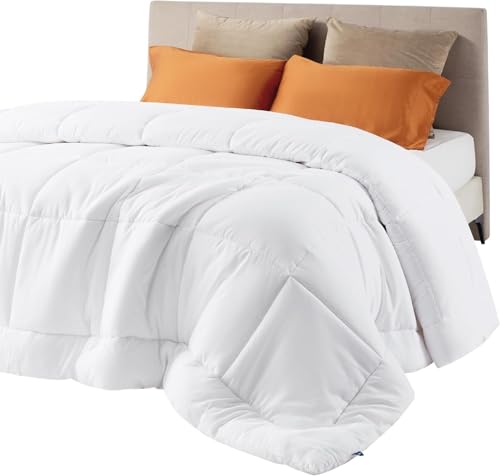
For most shoppers with a ceiling of $100, a down-alternative comforter from Utopia Bedding, Linenspa or Beckham Hotel Collection is the sensible starting point, while sleepers who run hot or want a fluffier, hotel-style loft should look at the lighter-fill versions in the same budget class and treat premium brands such as Brooklinen or Parachute as a stretch purchase. This guide explains how these options differ, what makers state about fill and construction, and how to match a comforter to your bed, climate and laundry habits.
Our top picks



As an Amazon Associate we earn from qualifying purchases at no extra cost to you.
Comforter Options at a Glance
| Product | Best for | Key stated features | Limits |
|---|---|---|---|
| Utopia Bedding Down Alternative Comforter | Spare rooms, dorms, first apartments | Microfiber shell, polyester fiberfill, box stitching with piped edges, corner tabs for a duvet cover; listed as machine washable, in sizes from twin to California king | Reviewers describe a thinner loft than premium options; occasional reports of uneven fill |
| Linenspa All-Season Down Alternative Quilted Comforter | Allergy-conscious buyers who want a hypoallergenic fill label | Quilted microfiber shell, polyester fiber fill marketed as hypoallergenic, box stitching and duvet loops, a 3-year warranty per listings, multiple sizes | Shell can feel slightly crisp at first, per reviewers |
| Beckham Hotel Collection Down Alternative Comforter | Shoppers who want a plush, hotel-style feel | Synthetic fiber fill marketed as a goose-down alternative, sold in several series (such as 1300 and 1600); described as lightweight and machine washable | Can run warm for hot sleepers; check the care tag for machine-wash limits |
| Bedsure down alternative comforter | Those who like a lighter weight | Microfiber shell and quilted pattern; check each listing for fill weight and sizes | Fill weight varies by model, so compare the listed grams per square metre |
| Brooklinen Down Alternative Comforter | Buyers who can stretch past this budget | Forbes Vetted names it its best down-alternative pick overall | Generally sits above the $100 cap, according to reviewers |
How to Think About a Budget Comforter
A comforter is a bed-sized quilted bag of fill. Under $100, the realistic choices are polyester-fiber or gel-fiber fills inside microfiber or brushed-polyester shells. Real down and down-feather blends are mostly above this cap, so this guide concentrates on down-alternative products. The trade-off between budget and premium shows up in three places: how evenly the fill is held in place, how soft the shell feels, and how long the loft lasts after repeated washing.
Fill type and warmth
Polyester fill does not have the natural temperature-regulating reputation of down, so warm sleepers sometimes feel it traps heat. Reviewers across several outlets note that lightweight or “all-season” versions are the safer pick if you share a bed with someone who sleeps cold or if your bedroom is heated. If you live somewhere with cold winters, a heavier “winter” fill may be worth it, but the heavier lines are bulkier to wash and dry. Manufacturers typically give fill weight in grams per square metre; a higher number generally means warmer, though shell and stitching also matter.
Shell fabric
Most budget comforters use a microfiber shell. It is smooth, wrinkle-resistant and inexpensive, but it breathes less than cotton. Some makers offer cotton-blend shells in slightly higher tiers. If you tend to overheat, look for a cotton or cotton-blend shell, or use a breathable cotton duvet cover over a plain insert.
Stitching: box versus baffle
Box stitching sews the shell in a grid so fill cannot migrate into a corner. Baffle-box construction uses small fabric walls that let the fill puff more. The cheaper the comforter, the more likely it is to rely on simple quilting lines. Lines run closer together on a well-built unit, and reviewers say this reduces clumping after a few washes.
Pick X If You Need Y
| If you want… | Pick | Why |
|---|---|---|
| A reliable spare-room or guest bed layer | Utopia Bedding | Widely sold, simple care, multiple sizes |
| A hypoallergenic fill label | Linenspa | The maker lists a hypoallergenic fill; confirm the exact wording on the product page for your size |
| A plusher, hotel-like drape | Beckham Hotel Collection | Synthetic down-alternative fill aims for a softer, loftier feel; check the series and fill weight in the listing |
| Lighter weight for warm sleepers | Lightweight Bedsure or Linenspa all-season | Lower fill weight means less heat retention |
| A premium feel and longer life | Brooklinen or Parachute | Outlets such as Forbes Vetted highlight them, though they usually cost more than the cap |
| Easy cleaning for kids or pets | Any machine-washable comforter plus a duvet cover | Washing the cover is easier than laundering the whole insert |
Sizing and Fit Notes
Comforter sizes are not perfectly standardised, so read the dimensions on the product page rather than relying on the size name. A queen comforter is typically around 88 by 88 inches; a king runs near 104 by 90. If you like a generous drape over a deep mattress, consider sizing up, as many shoppers do with a queen bed and a king comforter. Remember that pillow-top mattresses, mattress toppers and thicker foundations all reduce the overhang.
If you plan to put the comforter inside a duvet cover, look for corner tabs or loops. Several budget products include them, and they keep the insert from bunching. A comforter intended as a standalone top layer does not need them but should have a finished binding along the edge.
Care, Washing and Longevity
Follow the care label on your specific comforter. Many budget microfiber units are machine washable on a gentle cycle, but a queen or king can overload a household washer. A large-capacity front-loader or a laundromat machine usually handles it better. Reviewers frequently suggest drying on low heat with a few clean dryer balls to break up fill clumps; do not use high heat if the label warns against it, because polyester fibers can melt or mat.
A duvet cover protects the comforter from body oils and spills, and it is the simplest way to extend the life of a budget insert. Plan to wash the cover regularly and the insert a couple of times a year, or as the manufacturer advises.
Allergy and Skin Considerations
Hypoallergenic labels on bedding describe the fill material, not a guarantee for every person. Dust mites tend to build up in any bedding that goes unwashed, regardless of fill. If you have asthma, eczema or persistent allergy symptoms, ask your doctor or allergist what bedding habits suit you, and follow the manufacturer’s washing guidance. New comforters sometimes have a mild odor out of the bag; airing them out for a day or two is a common recommendation from makers.
Budget Tiers Explained
Budget tier
This is where Utopia Bedding, Linenspa and similar lines sit. Expect a microfiber shell, polyester fill and simple quilting. Value is strong for guest rooms and rentals, and reviewers consistently note that these products serve well for short-term needs. The drawbacks are lower loft, less airy feel and a higher chance of clumping.
Upper budget, near the cap
Products such as the Beckham Hotel Collection comforter aim for a more luxurious hand-feel and a puffier look. These are the ones to choose if the comforter is for your main bed and you want a longer service life.
Premium tier
Brooklinen, Parachute, Saatva and Layla appear on outlet lists such as Forbes Vetted and Sleep Foundation for their finer shells, better stitching and warranties. They typically exceed the budget this guide covers, so treat them as the next step up if your needs outgrow a budget insert.
Alternatives to a Standard Comforter
- Duvet insert plus duvet cover: More flexible, since you can swap covers by season and wash the cover frequently.
- Quilt or coverlet: A thinner layer that suits warm climates or layering over a blanket.
- Weighted blanket: A different product altogether; follow the maker’s weight guidance and ask a doctor if you have health concerns before using one, especially for children.
- Heated blanket: Only if you follow the manufacturer’s manual closely; features such as auto shut-off and safety certification vary by model, so read the specifications the maker lists.
What Budget Reviews Tend to Agree On
- Utopia Bedding is often described as the best-value option, but its loft is thinner than premium alternatives.
- Linenspa is frequently recommended for allergy-conscious shoppers and guest rooms, with the caveat that the shell can feel slightly crisp.
- Brooklinen and Parachute are repeatedly named at the top of down-alternative roundups but sit above the budget cap.
- Fluffier does not always mean better: very puffy comforters can sleep hot.
Buying Checklist
- Measure your mattress depth and decide how much drape you want.
- Pick a fill weight that matches your room temperature and sleep style.
- Confirm the washing instructions fit your machine.
- Look for stitching that anchors the fill and corner loops if you will use a cover.
- Read the return policy so you can send it back if it smells strongly or arrives uneven.
Frequently Asked Questions
Is a down-alternative comforter warm enough for winter?
It can be, if you choose a heavier fill weight and pair it with flannel sheets or a blanket underneath. Lightweight and all-season versions are better suited to mild climates or warm sleepers. Check the fill weight the maker lists rather than relying on the word “winter” alone.
How often should a comforter be washed?
Many makers suggest washing the insert only a few times a year, while a duvet cover or top sheet takes the day-to-day wear. If your comforter is used without a cover, wash it more often. Always follow the care label, as cycle and temperature limits differ by product.
Why does my comforter clump after washing?
Fill can bunch when the comforter is crowded in the machine or dried at too high a heat. Using a larger machine, a gentle cycle and low-heat drying with dryer balls usually helps, according to many reviewers. Closer stitching also reduces migration, which is why budget units without it clump more readily.
Do I need a duvet cover with a comforter?
It is not required, but it is a practical way to keep the insert clean and change the look of your bed. Covers are easier to launder than the full comforter. If the comforter has corner tabs, tie them to the cover loops to stop shifting.
What size comforter should I buy for a queen bed?
A queen comforter fits a standard queen mattress, but a king-sized one gives more drape on thicker mattresses or if two people share the bed and tug. Compare dimensions on the product page, because labelled sizes differ between brands.
Is a hypoallergenic comforter safe for people with allergies?
Hypoallergenic describes the fill, not the whole bed environment, so it does not guarantee relief for every person. If you have allergies or asthma, regular washing and guidance from your doctor or allergist matter more than any label.