Our Short List of 3
All 4 Picks at a Glance
| Product | Specs | Action |
|---|---|---|
 2. IETS GT500 Laptop Cooling Pad | Check price on Amazon | |
 3. Thermaltake Massive 20 RGB Laptop Cooling Pad | Check price on Amazon | |
 4. KLIM Wind Laptop Cooling Pad | Check price on Amazon | |
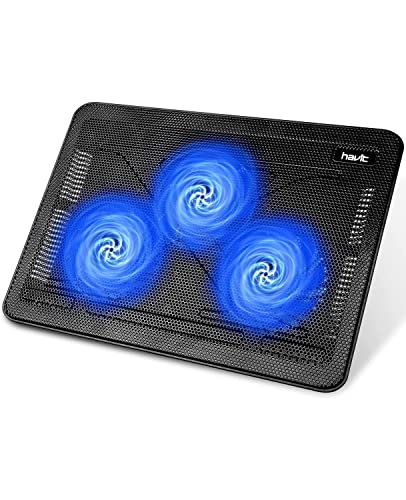 5. Havit HV-F2056 Laptop Cooling Pad | Check price on Amazon |
Key takeaways
- The best laptop CPU coolers for gaming compared: sealed turbo-fan pads and slim mesh decks with fan counts, maker-stated speeds and laptop fit ranges.
As an Amazon Associate, we earn from qualifying purchases made through links on this page.
A gaming laptop has very little thermal headroom. The CPU and GPU share heat pipes inside a thin chassis, the fans draw air through small vents in the base panel, and once those fans reach their limit the processor protects itself by cutting clock speed. Frame pacing suffers first in long sessions, and the keyboard deck grows hot enough to notice. An external cooling pad attacks the one variable you can change without opening the machine: the supply of cool air reaching those bottom intakes.
Not every pad helps in the same way. The five models below fall into two camps. Sealed turbo pads from llano and IETS use a single large blower and a foam gasket to pressurize the space under the laptop, pushing air through the intakes instead of letting it escape around the edges. Open mesh decks from Thermaltake, KLIM and Havit use one or more conventional fans under a perforated surface, which suits lighter loads and smaller budgets in desk space. Every figure in this guide comes from the maker or the product listing, including fan sizes, speed ranges and the laptop sizes each pad is built to hold.
What to look for in a laptop cooling pad for gaming
Fan design matters more than fan count. A ring of small fans spreads a gentle wash of air across the base panel, which helps when intake vents are scattered. A single large blower behind a foam seal builds pressure, which helps when intakes sit in one zone and the laptop can sit flat on the gasket. Check where your own machine draws air in before choosing between the two layouts.
Match the pad to your laptop size. Makers publish a fit range for every pad, and it is a physical limit, not a suggestion. A 15.6-inch pad under an 18-inch desktop replacement leaves the corners unsupported and the seal broken, while a 19-inch pad under a compact 14-inch machine wastes desk space and may park the fans away from the intakes entirely.
Power source changes how you use the pad. USB-powered pads draw from the laptop itself, which keeps the setup portable but caps fan speed. Pads with their own wall adapter, such as the llano V12 and IETS GT500, spin far faster and add a powered USB hub, at the cost of one more cable and a fixed desk position.
Speed control and noise go together. A stepless dial or touch control lets you run the fan only as fast as the game demands. Fixed-speed pads are simpler and lighter, but you accept the one noise level the maker chose. Published noise figures are maker figures measured in controlled conditions, so treat them as a comparison guide rather than a promise for your room.
Extras that earn their place. A removable dust filter slows the dust load reaching your laptop fans. A USB hub returns the ports the pad consumes. Adjustable feet lift the keyboard to a typing angle and open the gap under the chassis. None of these cool the CPU on their own, but each one removes a reason to stop using the pad.
The 5 best laptop CPU coolers for gaming
1. llano V12 Laptop Cooling Pad
The llano V12 is the reference point for the sealed turbo design. One 5.5-inch (140 mm) turbo blower sits under a memory foam perimeter gasket, and the pad runs from its own 36W wall adapter rather than the laptop. Llano publishes a fan range of 300 to 2,800 RPM with stepless adjustment, an LED display that shows the current speed, touch controls, a three-port USB hub and a removable dust filter with a spare in the box. The stated fit range is 15.6 to 19 inches, which covers the big 17.3-inch and 18-inch gaming machines that smaller pads cannot seal against, and three stand positions set the working height.
This is the pad for a heavy gaming laptop that lives on one desk and runs long sessions in demanding titles. The adapter power is exactly what lets the blower hold high speeds that USB power cannot reach.
The limits follow from the same design. At 2.15 kg before you add the laptop, the V12 is a desk fixture rather than a travel accessory, and it needs a free wall socket. Llano’s own comparison material puts noise anywhere from 40 dB at low speed to 70 dB near maximum, so the top of the range belongs under a headset. The foam seal also works best with flat base panels; strongly sculpted undersides leak pressure.
2. IETS GT500 Laptop Cooling Pad
The GT500 follows the same sealed-chamber logic with an even faster blower. IETS fits a single turbo fan rated to 5,000 RPM with an infinitely variable speed dial, a seal foam ring sized for 13 to 17.3-inch laptops, a dust filter behind the intake and a three-port USB hub. A DC input feeds the fan, and the rear stand adjusts through multiple height levels, with the listing showing seven positions. The footprint suits the mainstream 15.6-inch and 16-inch gaming laptops that make up most of the market, plus thinner 17.3-inch models.
Choose the GT500 if your machine sits inside that size window and you want the highest published fan speed in this group, with a dial you can nudge mid-session instead of a stepped control.
The trade-offs are noise and fit. A 5,000 RPM blower is audible at full speed even through game audio at modest volume, and the seal cannot help a laptop whose base is mostly speaker grille or raised rubber rails. Laptops above 17.3 inches overhang the foam and lose the pressure effect, so owners of 18-inch machines should look at the llano instead. The hub ports are for peripherals and data pass-through at modest speeds, not fast storage.
3. Thermaltake Massive 20 RGB Laptop Cooling Pad
Thermaltake takes the opposite route: one very large, slow fan under an open steel mesh panel. The Massive 20 RGB (model CL-N014-PL20SW-A) uses a 200 mm fan adjustable from 600 to 800 RPM, with a maker figure of 64 CFM of airflow and a 30 dBA noise figure. The panel measures 471 by 354.5 by 46.5 mm and is rated for notebooks from 10 to 19 inches, with three height settings at 3, 9 and 13 degrees. A 256-color RGB light ring runs around the edge with five lighting modes, and the pad draws power over USB.
This pad suits owners of large laptops who game at a fixed desk and value quiet running over maximum pressure. The big fan moving slowly is the classic recipe for low noise, and the tilt range helps with wrist angle during long sessions.
The limits are real. A top speed of 800 RPM cannot pressurize a chassis the way the sealed blowers do, so the cooling effect on a high-wattage machine is gentler. The pad is physically huge at just over 1.5 kg, and Thermaltake’s design can occupy two USB connections on the laptop, which stings on machines with few ports. There is no foam seal and no dust filter.
4. KLIM Wind Laptop Cooling Pad
The KLIM Wind is the long-running open-deck option. Four fans spin at up to 1,200 RPM under a metal mesh surface, fed by USB with one pass-through port returned. KLIM rates the pad for laptops from 11 inches upward, with full support through the common 15.6-inch and 17.3-inch sizes and larger machines resting with some overhang. Two tilt levels set the angle, front stoppers keep the laptop from sliding, and the whole pad weighs about 730 g, so it travels in a laptop bag without complaint.
Pick the Wind for a mid-range gaming laptop used in more than one place: home desk, campus, a friend’s house. It asks for nothing but a USB port and adds a modest, even airflow layer under the machine.
Its ceiling is airflow. Four small fans at 1,200 RPM move less air than any turbo pad here, and with no seal, much of it escapes around the chassis edges. Fan placement is fixed, so a laptop whose intakes sit between the fan circles gains less. The lighting color is tied to the version you buy rather than a control on the pad.
5. Havit HV-F2056 Laptop Cooling Pad
The Havit HV-F2056 is the slim classic of the group. Three 110 mm fans run at a maker-stated 1,100 RPM, give or take 200 RPM, for a published 65 CFM of airflow across a metal mesh top. The pad measures 380 by 280 by 28 mm, weighs 1.54 pounds, supports 15.6 to 17-inch laptops, and adds two USB ports plus two height settings. It has been sold in this form for years, which makes its specification sheet one of the most stable in the category.
This is the pad for a gamer who wants a light, simple lift with steady airflow for a 15.6-inch machine, at home or in a dorm room, with no adapter and no setup beyond one cable.
The simplicity cuts both ways. There is no fan speed control, so the single speed and its noise level are fixed. The bundled cable is USB-A to USB-A, and Havit’s own listing notes that a laptop with only USB-C ports needs an adapter you supply yourself. Cooling is a gentle wash rather than pressure, so heavily loaded 17-inch machines with small intakes will feel less benefit than the sealed pads provide.
Comparison table
| Pad | Fans | Maker-stated speed | Laptop fit | Power | Notable extras |
|---|---|---|---|---|---|
| llano V12 | 1 turbo blower, 5.5 inch | 300–2,800 RPM, stepless | 15.6–19 inch | 36W wall adapter | Foam seal, LED speed display, 3-port USB hub, dust filter |
| IETS GT500 | 1 turbo fan | Up to 5,000 RPM, dial control | 13–17.3 inch | DC adapter | Seal foam, dust filter, 3-port USB hub, multi-level stand |
| Thermaltake Massive 20 RGB | 1 fan, 200 mm | 600–800 RPM | 10–19 inch | USB | RGB light ring, 3 height settings, steel mesh panel |
| KLIM Wind | 4 fans | Up to 1,200 RPM | 11–17.3 inch (larger with overhang) | USB, 1 pass-through port | Metal mesh, 2 tilt levels, about 730 g |
| Havit HV-F2056 | 3 fans, 110 mm | 1,100 RPM, fixed | 15.6–17 inch | USB | 2 USB ports, 2 height settings, 1.54 lb |
Frequently asked questions
Do cooling pads actually lower gaming laptop temperatures?
They can, because most gaming laptops inhale through the base, and a pad raises both the air supply and the gap under the chassis. Sealed turbo pads publish the largest lab figures because pressure forces air through the intakes; open mesh pads publish smaller gains. Your result depends on intake position, room temperature and how hard the machine is running, so read maker figures as best-case numbers rather than guarantees.
Which pad fits an 18-inch gaming laptop?
Of this group, the llano V12 (rated to 19 inches with a seal sized for large chassis) and the Thermaltake Massive 20 RGB (rated to 19 inches) are the two built for that class. The IETS GT500 stops at 17.3 inches, and the Havit at 17 inches, so an 18-inch machine would overhang both and lose the seal or support.
Is a wall adapter pad better than a USB-powered pad?
Adapter power lets a blower spin far faster and run a proper USB hub, which is why the two sealed pads here use it. The cost is a fixed desk setup and one more cable. USB pads are lighter and portable, and for mid-range laptops playing less demanding games, their airflow is often enough. Match the choice to where and how you play.
Where should the fans sit relative to my laptop?
Under the intake vents. Flip your laptop over and note the grille positions before buying: centered intakes suit the single-blower pads, while intakes spread toward the corners suit multi-fan decks like the KLIM Wind. A powerful fan blowing into a blank section of base panel does very little.
Can a cooling pad replace cleaning or servicing the laptop?
No. A pad works on air supply from outside. Dust already packed into the internal fans and fin stacks, or dried thermal paste on the CPU, restricts cooling in ways no external fan can fix. A pad with a dust filter slows new dust arriving, which helps keep a clean machine clean for longer.
Conclusion
For maximum cooling on a large gaming laptop that stays at one desk, the llano V12 pairs the strongest sealed blower in this group with a fit range that reaches 19 inches. The IETS GT500 answers with the highest published fan speed for the 13 to 17.3-inch mainstream. If quiet running and a big, simple deck matter more, the Thermaltake Massive 20 RGB trades pressure for calm. The KLIM Wind and Havit HV-F2056 cover the portable end: light, USB-powered and easy to carry, with gentler airflow to match. Check your intake layout and screen size first, and any of the five will do the job its specification sheet describes.