Key takeaways
- Compare compact freestanding pellet stoves for winter home upgrades on heating area, hopper size, footprint and controls, using facts from each listing.
A compact pellet stove upgrade is decided less by maximum heat than by fit: the corner or wall run you can actually give up, the vent route out of the house, and whether the stove’s output matches a small space instead of overwhelming it. An oversized unit in a small room cycles on and off, wastes pellets, and still leaves the far rooms cold. The second decision is daily rhythm, because hopper size and control style decide whether the stove is a background appliance or a chore you feed twice a day.
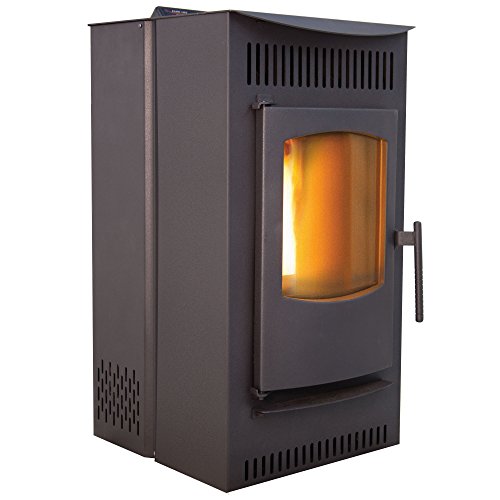

This guide is for owners of small homes, cabins, and additions who want pellet heat in one living zone this winter without surrendering half the room. The stoves below are all freestanding models with compact cabinets, chosen from the dimensions, heating areas, hopper capacities, and control features stated on their Amazon product pages, so you can compare footprint against output before committing to a vent route.
Quick Picks
As an Amazon Associate we earn from qualifying purchases.
| Product | Best for | Key spec from title |
|---|---|---|
| Castle Serenity 12327 Pellet Stove | Narrow corners in a main living room | Heats up to 1,500 sq ft, 40 lb hopper |
| Cleveland Iron Works PS20W-CIW Mini Pellet Stove | The smallest heated zone, with phone control | WiFi enabled, 18 lb hopper |
| ComfortBilt HP40 Alpine Pellet Stove | Cabins wanting high efficiency in a small cabinet | 25 lb hopper, heats up to 1,500 sq ft |
How to Choose
Size the heat output to the zone, not the whole house
Compact stoves earn their place as zone heaters. Match the stated heating area to the space the stove can actually reach through open doors and hallways, and remember that figure assumes reasonable insulation and ceiling height. A stove rated for 1,500 square feet will short-cycle in a 400 square foot cabin room, while one rated near 1,200 square feet is the honest fit there. Look at the output range rather than the headline number: a wide turndown range lets the stove idle low on mild evenings instead of overheating the room and shutting down.
Measure the footprint and plan the vent route together
The cabinet dimensions on the listing are only the start. You also need the manufacturer’s clearances to walls and furniture, floor protection under the stove, and a workable path for the vent pipe through a wall or up through the roof. Narrow cabinets around 18 inches wide open up corners that wider stoves cannot use, but depth plus clearance can still push the stove well into the room. Decide the exact spot, confirm the vent run from that spot, and only then order, because freight delivery makes returns a project in themselves.
Weigh hopper capacity against your refill tolerance
Hopper size is burn time. A 40 pound hopper can run roughly a day at low settings, while an 18 pound hopper on a small stove may need topping up daily in cold weather. Neither is wrong: the question is whether the stove heats a main room you pass constantly, where refilling is trivial, or a cabin you want to leave running between weekend visits. Burn time figures on listings are given per full load at stated settings, so compare them at similar output levels rather than taking the longest number at face value.
Choose controls that match how you live with the stove
Control style changes the ownership experience more than small specification differences. A programmable controller with thermostat and weekly modes lets the stove follow your schedule, firing before you get home and easing off overnight. WiFi control adds adjustment from your phone, useful for cabins and irregular hours. A simple dial or a few manual levels is easier for anyone in the household to run without a manual. Decide who will operate the stove daily, then pick the control set that person will genuinely use all winter.
The 3 Best Options
Castle Serenity 12327 Pellet Stove
The Serenity is the established compact choice for a main living area: a cabinet only about 18 inches wide that still carries a 40 pound hopper and heating coverage up to 1,500 square feet. Its Smart Controller is the standout, with manual, thermostat, weekly, and eco modes, so the stove can follow a household routine rather than running at one fixed rate. The fire chamber is built without tubes or hidden chambers, which the listing highlights for simpler cleaning, and the stove is approved for mobile home installation where that matters.
Specs
- Model: 12327
- Dimensions: 18-1/4 in W x 23-3/4 in D x 34 in H
- Heating coverage: up to 1,500 sq ft
- Heat output: 9,575-22,226 BTU (31,960 BTU input)
- Hopper capacity: 40 lb
- Burn time: 12 hours on high to 24 hours on low per 40 lb load
- Controls: Smart Controller with Manual, Thermostat, Weekly, and Eco modes
- Electrical: 120 volt plug-in, 77 watts operating, 400 watts ignition
- Weight: 186 lb
- Certifications stated on listing: EPA certified, mobile home approved
Best for: a small home’s main room, where a narrow cabinet and a weekly heating schedule matter most.
Watch out for: at 186 lb it is a two-person placement job, and venting is not part of the stove, so plan the vent kit separately.
ASIN: B00FQR70VY
Cleveland Iron Works PS20W-CIW Mini Pellet Stove
The PS20W-CIW is the smallest heater here, built for zones of roughly 800 to 1,200 square feet such as a cabin room, an addition, or a finished outbuilding. It pairs that small footprint with built-in WiFi, so you can raise the temperature from your phone before you arrive rather than heating an empty space all day. The trade-off for the compact cabinet is the 18 pound hopper in the listing title, which means more frequent refills than the other two stoves during a cold snap.
Specs
- Model: PS20W-CIW
- Hopper capacity: 18 lb
- Heating coverage: up to 1,200 sq ft
- Dimensions: 18.23 in W x 20.55 in D x 32 in H
- Controls: built-in WiFi with app control, control panel, and remote
- Ignition: automatic ignition
- Exhaust: 3 in vent
- Fresh air: fresh air supply kit included, per the manufacturer chart
- Certifications stated on listing: EPA approved and ETL listed
Best for: the smallest heated zone, especially a cabin or studio you want to warm up remotely before arriving.
Watch out for: some retailer pages describe this model with a larger hopper figure, so confirm the capacity on the Amazon listing itself before ordering.
ASIN: B07MY6TKF8
ComfortBilt HP40 Alpine Pellet Stove
The HP40 Alpine is ComfortBilt’s compact model, sized for up to 1,500 square feet with a 25 pound hopper in a cabinet smaller than the brand’s full-size stoves. Its listed efficiency of 81 percent is the highest figure in this group, which matters over a winter of pellet buying, and a remote is included for adjusting heat from across the room. It suits buyers who want the small footprint but prefer a conventional control layout over app-based management.
Specs
- Model: HP40 Alpine
- Heat output: up to 26,224 BTU
- Heating coverage: up to 1,500 sq ft
- Hopper capacity: 25 lb
- Efficiency: 81 percent, as listed
- Dimensions: about 17 in W x 21 in D x 30 in H
- Weight: 167 lb
- Controls: electronic thermostatic control with remote included
- Certifications stated on listing: EPA and CSA certified
Best for: cabins and small homes wanting the strongest listed efficiency in a compact cabinet, with remote control.
Watch out for: the Amazon brand field on this listing may read as generic, so confirm the seller and the HP40 Alpine model name on the page before ordering.
ASIN: B0CYHJYGV5
Which One Fits Your Situation
You are upgrading the heat in a small main living room
Choose the Castle Serenity. Its narrow cabinet fits the corner most small rooms can spare, the 40 pound hopper stretches refills to about a day at moderate settings, and the weekly controller mode matches a household routine of workdays and weekends without daily attention from you through the coldest weeks.
You heat a cabin or studio only when it is occupied
Take the Cleveland Iron Works Mini. WiFi control lets you start the warm-up before you set off, the output range suits a genuinely small space, and the compact cabinet leaves floor area for furniture in a one-room layout. Accept the smaller hopper as the price of the smallest footprint here.
You want pellet heat to replace electric heaters in one zone
The ComfortBilt HP40 Alpine fits this job: output sized for up to 1,500 square feet, the highest listed efficiency in the group for lower fuel use across the whole season, and a remote for the small adjustments that decide whether zone heating actually replaces the old heaters in daily practice.
Your room is tight and the vent must exit straight through a wall
Start with the Serenity or the Mini and work backwards from the vent. Both are narrow, direct-vented designs suited to short horizontal runs, but the final choice depends on the clearance figures in each manual for your exact wall position, so download the manual for your shortlisted stove before buying pipe.
Common Mistakes
- Ordering the biggest stove that fits the budget, then living with short-cycling and an overheated main room all winter.
- Measuring only the cabinet and forgetting clearance to walls and furniture, which pushes the stove further into the room than planned.
- Assuming the vent kit is in the box; venting is typically bought separately and must match the stove’s exhaust size.
- Storing pellets in a damp garage or basement, where they absorb moisture, swell, and feed poorly.
- Skipping the ash and firepot cleaning routine during the season, which steadily strangles airflow and heat output.
Safety Notes
- Install the stove exactly to the clearances in its manual, on non-combustible floor protection, and have the vent installation checked against local building and fire codes before first use.
- Use proper pellet vent pipe for the full run, seal the joints as the manual directs, and inspect the vent for ash build-up and blockages during the heating season.
- Fit a working carbon monoxide alarm in the room where the stove runs, and test it on the schedule its maker recommends.
- Keep furniture, curtains, firewood, and pellet bags at or beyond the stated clearance distances, and treat all stove surfaces as burn hazards for children and pets.
- Let ash cool completely before removal, and dispose of it in a metal container with a lid, kept away from combustible materials.
- Remember that pellet stoves need household electricity for the auger, fans, and igniter, so the stove will not run during a power cut unless you have a suitable backup supply arranged.
- Store pellets dry and off the floor, away from the stove itself, and never use liquid fuels or rubbish in a stove designed for wood pellets only.
Frequently Asked Questions
Can a compact pellet stove heat a whole house?
It can heat a small, open-plan home where warm air moves freely between rooms, and several models here are rated for up to 1,500 square feet. In a larger or compartmentalised house, treat it as zone heating: the room with the stove stays warmest, and distant bedrooms will lag behind unless doors stay open and air can circulate.
How much floor space does one of these stoves really take?
The cabinet is only part of it. A stove around 18 inches wide and 24 inches deep still needs its listed clearances behind and beside it, plus floor protection in front where ash and embers are handled. Plan on the working footprint being noticeably larger than the cabinet dimensions printed on the listing.
What happens to a pellet stove in a power cut?
It stops. The auger that feeds pellets, the combustion and convection fans, and the igniter all run on household electricity, so a power cut ends the burn once the pellets in the firepot are consumed. If outages are common in your area, factor a suitable backup power arrangement into the upgrade plan.
How often does a compact pellet stove need cleaning?
Expect a light routine during the heating season: emptying the firepot and ash pan regularly, keeping the glass and air passages clear, and a deeper clean of the vent and internal passages at intervals the manual sets out. Compact stoves with simple, open fire chambers make the routine quicker, but none of them remove it.