Our Short List of 3

- Best for: Hunters who want a two-inch cut without collars or rings to replace.
- Weight: 100 grain
- Blades: 2, swept-back stainless steel, .035 in thick
- Cutting diameter: 2 in
- Ferrule: machined stainless steel, one piece

- Best for: Hunters who take angled shots and want steel construction over a wider cut.
- Weight: 100 grain
- Blades: 3, rear-deploying
- Cutting diameter: 1.5 in
- Construction: machined steel throughout
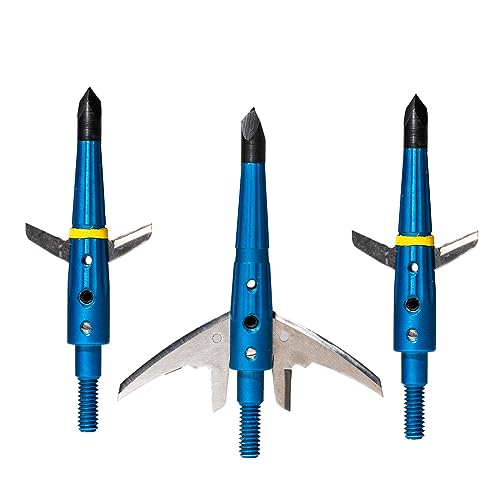
- Best for: Hunters who want to confirm broadhead flight with the actual head before the season.
- Weight: 100 grain
- Blades: 2, arched stainless steel, .032 in thick
- Cutting diameter: 1 in in flight, 2 in after penetration
- Ferrule: reinforced ribbed anodized aircraft aluminum
All 5 Picks at a Glance
| Product | Specs | Action |
|---|---|---|
| Rage Hypodermic NC 2-Blade Broadhead, 100 Grain |
| Check price on Amazon |
| G5 Deadmeat V2 3-Blade Broadhead, 100 Grain |
| Check price on Amazon |
| Swhacker #261 Levi Morgan Series 2-Blade Broadhead |
| Check price on Amazon |
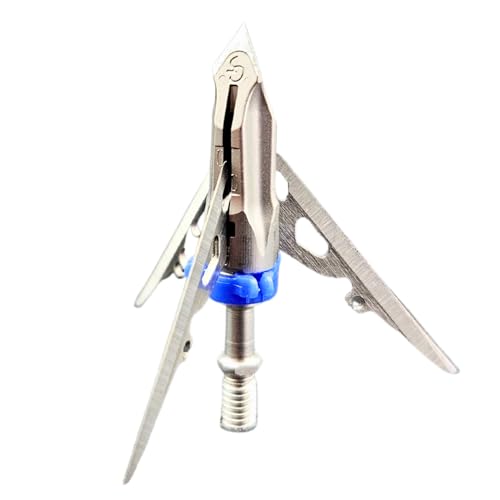 G5 Megameat Broadhead, 125 Grain (MM101) |
| Check price on Amazon |
 Grim Reaper X-Bow Razortip Broadhead, 100 Grain |
| Check price on Amazon |
Key takeaways
- Five expandable broadheads compared on cut diameter, blade count, grain weight and retention system, with specs taken from each head's Amazon listing.
Choosing an expandable broadhead is a decision about timing and trust. Timing, because a head that opens at the hide starts cutting immediately but spends arrow energy doing it, while a head that slips through closed and opens inside saves that energy for the far side. Trust, because something has to hold the blades shut through months of quiver foam, truck rides and cold mornings, then let go in the one second that matters. Collars, clips and locking tabs each answer that problem differently, and each fails in its own way.
This guide is for compound bow hunters working through that trade-off, crossbow hunters whose bolts arrive faster than most heads were designed for, and heavy-arrow shooters who want width without giving up momentum. Every head below was picked from its Amazon listing name and printed specifications: grain weight, blade count, cutting diameter, ferrule material and the retention system the listing describes, so the comparison rests on what each maker actually states.
Quick Picks
As an Amazon Associate we earn from qualifying purchases
| Product | Best for | Key spec from title |
|---|---|---|
| Rage Hypodermic NC 2-Blade Broadhead | A two-inch cut with nothing to restock | 100 grain, 2 in cut, No Collar lock |
| G5 Deadmeat V2 3-Blade Broadhead | Angled shots and bone contact | 100 grain, 1.5 in cut, all-steel build |
| Swhacker #261 Levi Morgan Series | Practicing with the hunting head itself | 100 grain, two-stage 1 in to 2 in cut |
| G5 Megameat Broadhead, 125 Grain | Heavy arrows and crossbow energy | 125 grain, 2 in cut, 3 blades |
| Grim Reaper X-Bow Razortip Broadhead | Crossbows shooting at high speed | 100 grain, 1.5 in cut, 3 blades |
How to Choose
Cutting diameter against the energy you actually have
Cut width is bought with arrow energy, and the exchange rate is not negotiable. A two-inch head, especially a three-blade one, needs real momentum behind it to open fully and keep driving; a short-draw or lower-poundage setup spends so much energy at the hide that the far-side hole, the one that leaves the better blood trail, may never happen. Narrower cuts around one and a half inches ask far less of the arrow and keep penetrating on quartering hits. Match the diameter to the energy your bow or crossbow genuinely produces, not the diameter that looks most impressive in the pack.
How the blades are held shut
Retention is where expandables differ most, and every system has an upkeep cost. Shock collars are cheap polymer rings that shear on impact, but they crack with age and are spent after one shot. Clip systems such as SnapLock seat the blades mechanically and can be reset, yet a clip that is not fully seated lets a blade sit proud and plane in flight. No-collar designs move the lock into the pivot itself, removing consumables entirely at the cost of a wear point you must inspect. Decide which failure mode you would rather manage all season.
Grain weight and the arrow you already built
Most expandables come in 100 and 125 grain versions, and the right one is the weight your arrows were already built and practiced around. Adding 25 grains at the point raises front-of-center balance and can help a heavy shaft carry momentum, but it also changes tune, trajectory and grouping, sometimes enough to move your point of impact at hunting ranges. Crossbow shooters should check total bolt weight against the maker’s minimum for their bow. Whatever you choose, your practice points should match it exactly, or your summer sighting-in proves very little.
Ferrule material, tip shape and practice options
The ferrule takes the first and hardest contact. Machined steel bodies shrug off rib and shoulder hits that bend or crack aluminum ferrules, which matters most on the angled shots nobody plans. Tip shape steers the entry: a chisel tip starts through hide and light bone before the blades arrive, while a needle-style hypodermic tip slips in with less resistance on clean broadside angles. Finally, look at how you will practice. A matched practice point or a blade lock that pins the head shut lets you confirm flight with the real thing instead of hoping it behaves.
The 5 Best Options
Rage Hypodermic NC 2-Blade Broadhead, 100 Grain
- Best for: Hunters who want a two-inch cut without collars or rings to replace.
- Weight: 100 grain
- Blades: 2, swept-back stainless steel, .035 in thick
- Cutting diameter: 2 in
- Ferrule: machined stainless steel, one piece
Hunters who want a two-inch cut without collars or rings to replace.
The locking tabs are a wear point, so inspect them after target sessions and retire a head if a tab looks flattened.
This is the head for hunters who are done restocking collars and O-rings. Tabs at the blade pivot hold the two swept-back blades shut in the quiver and in flight, then let them slide open on the SlipCam pivot at impact, reaching a full two-inch cut behind a hybrid hypodermic tip. The ferrule is machined from a single piece of stainless steel, which shrugs off rib contact better than aluminum bodies. If your arrow build is a standard 100-grain setup and your past failures came from retention parts rather than shot placement, this design removes that variable.
G5 Deadmeat V2 3-Blade Broadhead, 100 Grain
- Best for: Hunters who take angled shots and want steel construction over a wider cut.
- Weight: 100 grain
- Blades: 3, rear-deploying
- Cutting diameter: 1.5 in
- Construction: machined steel throughout
Hunters who take angled shots and want steel construction over a wider cut.
Seat the collar fully before every shot; a blade sitting slightly proud will plane in flight and open up your groups.
Not every shot arrives broadside, and this head is built for the ones that do not. The ferrule and body are machined from steel rather than cast, the three blades deploy rearward, and the finished cut is a moderate one and a half inches, a size that keeps driving when the entry clips a rib or the shoulder edge. A SnapLock collar keeps the blades seated in the quiver, and the pack includes a BMP practice point shaped to fly like the head itself, so sighting in does not dull hunting blades.
Swhacker #261 Levi Morgan Series 2-Blade Broadhead
- Best for: Hunters who want to confirm broadhead flight with the actual head before the season.
- Weight: 100 grain
- Blades: 2, arched stainless steel, .032 in thick
- Cutting diameter: 1 in in flight, 2 in after penetration
- Ferrule: reinforced ribbed anodized aircraft aluminum
Hunters who want to confirm broadhead flight with the actual head before the season.
The exposed wing blades bend if they strike a hard target frame, so check them after every practice session.
Most mechanicals ask you to trust that they fly like your field points; this one lets you check. A blade lock pin holds the main blades closed, turning the hunting head itself into a practice head, and in the field small wing blades open the hide while the main blades stay folded, deploying inside to the full two-inch cut. That two-stage entry spends less energy at the surface, and the arched blade shape is built to shed resistance after entry. It suits hunters who practice often and want practice to prove something.
G5 Megameat Broadhead, 125 Grain (MM101)
- Best for: Heavy-arrow builds and crossbows with energy to spare for a wide three-blade cut.
- Weight: 125 grain
- Blades: 3
- Cutting diameter: 2 in
- Construction: stainless steel
Heavy-arrow builds and crossbows with energy to spare for a wide three-blade cut.
Adding 25 grains over a 100-grain point changes tune and front-of-center balance, so re-check arrow flight before the season.
This head pairs the heaviest common point weight with one of the widest three-blade cuts in this group. The extra 25 grains ride in a stainless steel body whose three blades open to two inches, so a heavy arrow keeps its momentum while still cutting a wide channel. A chisel tip leads the ferrule, and the blades are held by the same SnapLock collar system used on the smaller Deadmeat. It fits long-draw, high-poundage compounds and crossbows, and hunters who built their arrows around a 125-grain point on purpose.
Grim Reaper X-Bow Razortip Broadhead, 100 Grain
- Best for: Crossbow hunters who want a head made for bolt speeds, not adapted from a bow head.
- Weight: 100 grain
- Blades: 3
- Cutting diameter: 1.5 in
- Tip: Razortip
Crossbow hunters who want a head made for bolt speeds, not adapted from a bow head.
The retention is tuned for crossbow speeds, so it is not the head to borrow for a vertical bow setup.
Fast crossbows are hard on mechanical heads, and this one was drawn up for that job. The Razortip point leads three blades that open to a one-and-a-half-inch cut, a diameter chosen to keep a bolt driving straight at crossbow speeds instead of dumping energy at the hide. There are no collars or rubber bands in the design, so there is nothing to perish in storage or seat wrong in the dark. It is the natural pick for hunters whose crossbow shoots well past the speeds most compound-rated heads were built around.
Which One Fits Your Situation
Your compound bow runs a standard 100-grain setup
Start with the Rage Hypodermic NC if you want the full two-inch cut and broadside shots are your norm, since the collar-free lock removes the consumable you would otherwise replace all season. If your shots more often arrive quartering or close to the shoulder, the G5 Deadmeat V2 trades width for an all-steel body and a cut that keeps driving through awkward entries.
Your crossbow is fast enough to worry ordinary heads
Pick the Grim Reaper X-Bow, because its retention and one-and-a-half-inch cut were specified for bolt speeds rather than adapted from a vertical-bow head. If your crossbow also carries plenty of energy and you want more width, the 125-grain Megameat brings a two-inch three-blade cut, provided your total bolt weight stays within the maker’s stated range for your bow.
You built heavy arrows for larger game
The G5 Megameat in 125 grain is the natural fit: the point weight matches the build you already tuned, the stainless body tolerates rib and shoulder contact, and the two-inch cut uses the momentum your heavier shaft carries. Confirm your practice points match the new weight and re-check grouping at your longest realistic range before the season opens.
You practice all summer and hate surprises in October
The Swhacker #261 lets you shoot the exact head you hunt with, blades locked shut, so your practice groups are evidence rather than hope. The Deadmeat V2 is the other honest option here, since its included BMP practice point is shaped to mirror the hunting head’s flight without spending a set of blades on foam.
Common Mistakes
- Switching from 100 to 125 grains, or the reverse, without re-checking tune, grouping and point of impact at hunting ranges.
- Assuming any expandable is crossbow-safe, or that a crossbow head will open reliably from a lower-energy vertical bow.
- Reusing a head after a shot without inspecting the blades, ferrule and retention parts for bends or cracks.
- Letting shock collars or bands age in a hot truck or garage, then trusting them on opening morning.
- Practicing only with field points and never confirming that the hunting head groups in the same place.
Frequently Asked Questions
Do expandable broadheads really fly like field points?
Usually close, because the closed head presents a slim profile in flight, but close is a claim to verify rather than assume. A practice point matched to the head, or a blade lock that lets you shoot the head itself, turns that question into a measurement. Any planing from a proud blade or a bent ferrule shows up immediately on paper.
How much bow energy does a wide expandable need?
There is no single number, because cut width, blade count and entry angle all change the demand. As a working rule, two-inch three-blade heads belong on high-poundage compounds, heavy arrows and crossbows, while one-and-a-half-inch cuts forgive far more. When your setup is marginal, choose the narrower head and keep the far-side hole that a wider head might never reach.
Can one head serve both a compound bow and a crossbow?
Only when the listing states both uses. Retention tuned for a vertical bow can let blades open early under crossbow acceleration, and crossbow-tuned retention may not open reliably at compound speeds. Several heads here are sold in separate compound and crossbow versions with the same name, so match the version on the listing to the bow in your hands.
What should I check on a head after it has been shot?
Inspect the ferrule for bends by spinning the head on a flat surface, run a fingernail along each blade for rolled edges, and confirm the retention still holds the blades with the same resistance as a fresh head. Replace blades or retire the head when anything looks off; a wounded animal is the worst place to learn a blade was bent.