Key takeaways
- Five chainsaws in the under-200 class — two gas and three corded electric picks for firewood, storm cleanup and yard work, compared on bar length, power, starting and upkeep.
The under-$200 class is where homeowner chainsaws live. Nothing in this class is a professional felling saw, and none of these five picks pretends to be one. What the class does cover well is the work most properties actually generate: cutting firewood for a home stove, clearing storm-felled limbs, pruning thick branches, taking down small to medium trees, and bucking logs into rounds. Every saw below sits in that class as the listing and maker evidence places it, and its specifications match that kind of work.
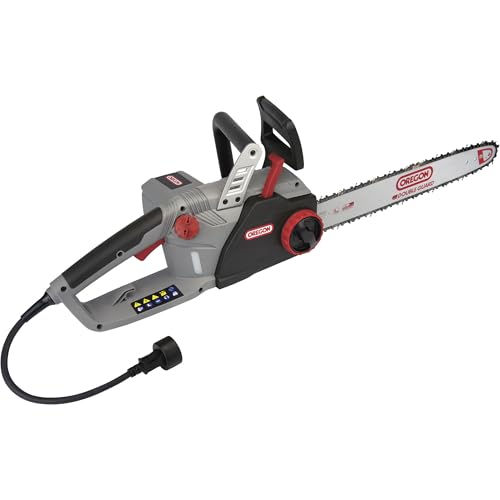

The pool splits two ways. Two picks are gasoline saws — a 42cc Poulan Pro with an 18-inch bar and a 38.2cc Husqvarna with a 16-inch bar — for work that happens away from the house, where no outlet exists. Three picks are corded electric saws from Oregon, WORX and CRAFTSMAN, which trade roaming range for instant starting, no fuel mixing and far less maintenance, as long as your cutting happens within extension-cord reach of a receptacle.
One honest note about what is not here: there is no cordless pick. Battery saws in this class are sold in tool-only and kit configurations whose listings straddle the class line, so this roundup sticks to gas and corded models whose listings are unambiguous. If your work is all near the house, a corded saw is the simplest tool here. If it is not, go gas.
Top pick: Poulan Pro PR4218 — the most capable all-rounder here, with the largest engine and longest bar of the five.
Runner-up: Oregon CS1500 — the corded pick for people who cut often, thanks to its built-in self-sharpening system.
Quick Picks
As an Amazon Associate we earn from qualifying purchases.
| Product | Best for | Key spec |
|---|---|---|
| Poulan Pro PR4218 | Best overall | 42cc gas engine, 18-inch bar, case included |
| Oregon CS1500 | Best corded for frequent cutting | 15-amp motor, 18-inch bar, built-in self-sharpening |
| Husqvarna 120 Mark II | Best gas saw for lighter work | 38.2cc X-Torq engine, 16-inch bar |
| WORX WG303.1 | Best tensioning system | 14.5-amp motor, 16-inch bar, auto-tension chain |
| CRAFTSMAN CMECS600 | Lightest corded pick | 12-amp motor, 16-inch low-kickback bar |
How to Choose a Chain Saw in This Class
Gas or corded electric
This is the first decision, and it is about where you cut, not which technology is better. A gas saw works anywhere on your land, starts its work the moment it is fueled, and asks for more in return: mixed fuel at the correct ratio, a pull starter, air-filter and spark-plug upkeep, and winter storage care. A corded electric saw starts with a trigger pull every single time, needs no fuel and almost no engine maintenance, and is limited to the length of an outdoor-rated extension cord. If your cutting is firewood processing at a woodpile far from the house, gas is the honest answer. If it is storm cleanup and pruning around the home, corded electric removes most of the friction from the job.
Bar length and the work it matches
Bar length should follow the diameter of what you cut, not ambition. A 16-inch bar handles limbs, small trees and firewood rounds for most home stoves, and it is easier to control, lighter to carry and quicker to keep sharp. An 18-inch bar earns its place if you regularly fell medium trees or buck larger logs, because a bar should comfortably exceed the diameter of a one-pass cut. Longer bars also mean longer chains to tension and sharpen, so buy the length your wood actually requires.
Engine size and motor amps, in context
For gas saws, cubic centimeters describe engine displacement: the 42cc Poulan Pro has more cutting headroom than the 38.2cc Husqvarna, which shows up when the bar is buried in hardwood. For corded saws, amps describe the motor’s draw: the 15-amp Oregon sits at the top of what a household circuit supplies, the 14.5-amp WORX just below it, and the 12-amp CRAFTSMAN is a lighter-duty tool for lighter wood. Do not compare cc against amps across the two types — they measure different machines. Compare gas against gas and corded against corded.
Starting, tensioning and oiling
The details that decide whether a saw gets used or gathers dust are the small systems. Spring-assist starting on the Poulan Pro reduces the pull effort on its starter. Tool-free or automatic chain tensioning — the WORX auto-tension system, and tool-free adjusters on the Oregon and CRAFTSMAN — means you will actually keep the chain correctly set instead of postponing it. Automatic oilers on all five picks feed bar oil as you cut; your job is simply to keep the reservoir filled, because a dry bar and chain wear out fast.
Class lines move — check the listing
Class membership here rests on how each model is positioned by its maker and in the wider market, and listings drift over time. Wherever a pick sits near the ceiling of the class, its section says so; the practical step is to confirm the listing still sits in this class before you order.
The 5 Best Options
1. Poulan Pro PR4218 — Best overall
The PR4218 is the saw in this roundup that covers the widest range of homeowner work. Its 42cc two-cycle gas engine is the largest here, and paired with the 18-inch bar it will fell medium trees, buck firewood rounds and work through storm cleanup without the bar length or the engine becoming the limit on most residential jobs. It ships with a carrying case included, which matters more than it sounds — a saw that lives in a case keeps its chain off the garage floor and its bar oil off everything else.
Starting is helped by a spring-assist system that reduces the effort of the pull starter, a real consideration on a 42cc engine. The automatic oiler feeds the bar and chain as you run, and its 50:1 fuel mix is the same ratio the Husqvarna below uses, so one fuel can serves both saws.
Specs
- Engine: 42cc 2-cycle gas
- Bar: 18-inch
- Fuel mix: 50:1
- Oiler: automatic
- Starting: spring-assist (EPS)
- Included: carrying case
Best for: Homeowners who cut firewood and handle storm cleanup away from the house, and who want one gas saw that covers the whole property.
Watch out for: Older lookalike listings for near-identical Poulan Pro 18-inch models circulate under different model numbers — confirm the listing is the PR4218 with case included before ordering. Poulan Pro is a homeowner brand owned by Husqvarna; this is a capable residential saw, not a professional-grade machine, and it should not be bought as one. Its position in this class has also drifted upward at times in the past, so if staying inside the class matters to you, confirm where the listing sits before you order.
View the Poulan Pro PR4218 on Amazon
2. Oregon CS1500 — Best corded for frequent cutting
The CS1500 solves the problem that quietly ruins corded saws: chain sharpening. Its PowerSharp system is built into the saw — engage the lever and the chain sharpens itself in seconds, so the saw keeps cutting cleanly through a long firewood session instead of slowly going dull. For anyone who cuts regularly near the house, that feature changes how much work the saw gets through.
The motor is a 15-amp corded unit, the strongest draw in this roundup, driving an 18-inch bar — the same bar length as the top pick, which makes the CS1500 the closest corded equivalent for woodpile work. Chain tensioning is tool-free, the oiler is automatic, and because it is corded there is no fuel to mix, no starter to pull and no engine to winterize. The version described here is the US 120-volt model; an export version exists and is not this pick.
Specs
- Motor: 15-amp corded electric (120V)
- Bar: 18-inch
- Sharpening: PowerSharp built-in self-sharpening
- Tensioning: tool-free
- Oiler: automatic
Best for: Frequent cutting near an outlet — firewood processing at a woodpile by the house, regular pruning and cleanup — where a sharp chain on demand keeps sessions productive.
Watch out for: It is corded, full stop. It needs an outdoor-rated extension cord, and your cutting radius is that cord. Bundle listings pairing this saw with a helmet or bar oil also circulate; the pick here is the bare saw, so check what the listing actually contains.
View the Oregon CS1500 on Amazon
3. Husqvarna 120 Mark II — Best gas saw for lighter work
The 120 Mark II is Husqvarna’s entry-level saw, and it brings the brand’s homeowner engineering to the ceiling of this class. The 38.2cc X-Torq two-cycle engine is tuned to use less fuel and produce fewer emissions than a plain engine of its size, and the 16-inch bar makes the whole package noticeably more manageable than the 18-inch top pick for limbing, pruning and smaller felling. Air Injection helps keep debris out of the air filter, LowVib damping reduces the buzz that reaches your hands, and a combined choke/stop control simplifies starting and reduces the chance of flooding the engine.
For a household whose cutting is mostly smaller trees, thick branches and modest firewood, this is the gas saw that fits the work instead of exceeding it.
Specs
- Engine: 38.2cc X-Torq 2-cycle gas
- Bar: 16-inch
- Fuel mix: 50:1
- Features: Air Injection, LowVib, combined choke/stop
Best for: Lighter gas work — small trees, limbing, pruning and moderate firewood — where a 16-inch bar is the right size and easier handling matters.
Watch out for: This saw sits at the ceiling of the class, and some retailers position it above the class entirely — if the class line matters to you, confirm the listing before ordering. It is also sold with a 14-inch bar under other listings; the specifications here match only the 16-inch version, so verify the bar length on the listing. And do not confuse it with the Mark III, a different and higher-class model that is not this pick.
View the Husqvarna 120 Mark II on Amazon
4. WORX WG303.1 — Best tensioning system
Chain tension is the maintenance task owners most often skip, and the WG303.1 is built around removing that excuse. Its patented auto-tension system keeps the chain at the correct setting on its own, so the saw stays ready without the routine of slack-checking and knob-turning that other saws demand. The 14.5-amp motor drives a 16-inch bar, the automatic lubrication system draws from a 200 ml oil reservoir, and a built-in chain brake adds a layer of safety that not every saw in this class includes.
With bar and chain fitted, the maker’s manual puts it at about 11 pounds, which makes it an approachable saw for owners who find gas saws heavy and intimidating. It is a 120-volt corded tool for work around the home.
Specs
- Motor: 14.5-amp corded electric (120V)
- Bar: 16-inch
- Tensioning: patented auto-tension system
- Oiler: automatic, 200 ml reservoir
- Safety: built-in chain brake
- Chain: 57 links, 3/8-inch pitch
Best for: Owners who want the lowest-friction corded saw — no fuel, no pull start, and no manual chain-tensioning routine to keep up with.
Watch out for: Check this listing first before planning around it — offers on this model have been thin in indexed listing snapshots, with no featured offer showing, so confirm there is a live offer on the listing before counting on it. Do not confuse it with the WG304.1, a different 18-inch, 15-amp model, or the smaller 14-inch WG300.
View the WORX WG303.1 on Amazon
5. CRAFTSMAN CMECS600 — Lightest corded pick
The CMECS600 is the light-duty end of this roundup, and it is honest about it. A 12-amp motor and a 16-inch low-kickback bar and chain make it a pruning and light-firewood tool: branches, small limbs, storm debris around the yard, and rounds from smaller logs. Tool-free chain tensioning keeps setup quick, the automatic oiler has an oil-level window so you can see at a glance when it needs filling, and the maker rates the motor at 3.5 hp peak.
Its appeal is how little it asks of the owner. It is light to handle, starts with a trigger, and stores without fuel or fumes. For a small property where the cutting list is measured in branches rather than cords of wood, it is the right-sized tool.
Specs
- Motor: 12-amp corded electric (120V)
- Bar: 16-inch low-kickback bar and chain
- Tensioning: tool-free
- Oiler: automatic with oil-level window
- Output: 3.5 hp peak (maker’s figure)
Best for: Light yard work on smaller properties — pruning, limbing and small firewood — where a light, simple corded saw is all the tool the job needs.
Watch out for: A very light weight figure circulates for this model from listing spec tables; that figure is a tool-only number, so do not compare it head-to-head against the all-up weights of gas saws. And this pick is the corded CMECS600 only — CRAFTSMAN’s V20 cordless chainsaws are different tools on a battery platform, not this listing.
View the CRAFTSMAN CMECS600 on Amazon
Which One Fits Your Situation
You heat with wood and process firewood away from the house
Take the Poulan Pro PR4218. The 42cc engine and 18-inch bar are the combination in this class that will buck rounds and fell medium trees all afternoon without an outlet anywhere in sight.
Your cutting happens near the house and you cut often
Take the Oregon CS1500. The self-sharpening system means the chain is sharp every session, and corded power never needs fuel, charging or a pull starter — just an outdoor-rated cord and bar oil.
Your trees are small and you value easy handling
Take the Husqvarna 120 Mark II. The 16-inch bar, LowVib damping and combined choke/stop make it the most manageable gas saw here for limbing, pruning and smaller felling.
You want the least maintenance possible
Take the WORX WG303.1 — after confirming a live offer on its listing. Auto-tension removes the chore owners skip most, and corded power removes fuel and engine upkeep entirely.
Your property is small and the work is light
Take the CRAFTSMAN CMECS600. For branches, debris and small rounds, its lighter motor is not a compromise; it is the correct size, and the tool asks almost nothing of you between uses.
Common Mistakes
Buying bar length for ego. An 18-inch bar on a saw that only ever cuts 8-inch branches adds weight, chain to maintain and kickback leverage for nothing. Match the bar to your wood.
Running a loose or dry chain. A slack chain derails; a dry chain destroys the bar. Even with automatic oilers and tensioners, glance at both before every session.
Treating a corded saw like a cordless one. Corded saws need an outdoor-rated extension cord sized for their amp draw. An undersized indoor cord will starve the motor and overheat.
Ordering a lookalike model. Several picks here have near-identical siblings — a 14-inch version of the Husqvarna, an 18-inch version of the WORX, older Poulan Pro listings, CRAFTSMAN’s cordless line. Confirm the exact model number on the listing matches the pick.
Mixing fuel wrong. Both gas saws here run a 50:1 fuel-to-oil ratio. Straight gasoline in a two-cycle engine will seize it, quickly and permanently.
Expecting professional durability at this class. These are homeowner saws. Used on homeowner work and maintained, they last; run daily on commercial felling, they will not.
Frequently Asked Questions
Is a chain saw in this class enough for firewood?
For most home firewood, yes. Rounds from small and medium trees are exactly what a 16- or 18-inch bar in this class is for. Consistently cutting very large hardwood trunks is professional work, and that is where this class ends.
Gas or corded electric — which should a first-time owner choose?
If all your cutting is within extension-cord reach of an outdoor outlet, corded electric is the simpler first saw: it starts instantly, needs no fuel mixing and asks for almost no maintenance. If you cut anywhere beyond that reach, gas is the only one of the two that follows you there.
Do corded electric chain saws need bar oil?
Yes. Every pick in this roundup, gas and corded alike, has an automatic oiler, but automatic means it pumps oil while cutting — you still have to keep the reservoir filled with bar and chain oil. Electric motors remove engine maintenance, not chain maintenance.
Why is there no cordless saw in this roundup?
Battery saws in this class are sold in tool-only and kit configurations whose listings fall on both sides of the class line, so no single cordless configuration could be pinned cleanly. This roundup covers the gas and corded models whose listings are unambiguous.
What does the class ceiling note on the Husqvarna mean?
It means the 120 Mark II is positioned at the very top of the under-$200 class by its maker, and some retailers place it above the class. The saw itself is the same either way; if staying within the class is a condition of your purchase, check the listing at the time you order.