Key takeaways
- Two verified walk-in chicken coops compared by flock size, interior height, footprint and weight, for keepers who want to work inside the coop.
Disclosure: As an Amazon Associate, we earn from qualifying purchases.
Our top pick: Aivituvin Extra Large Chicken Coop for 8–12 Chickens. Runner-up: OverEZ Classic Large Chicken Coop.
A walk-in chicken coop changes the daily routine of keeping hens. Instead of crouching through a low door, reaching blindly into corners, or dragging equipment in from outside, the keeper steps through a proper door and stands, or nearly stands, inside the space where the birds live. Cleaning takes less time because bedding can be raked and carried rather than scraped through a hatch. Health checks are easier because a hen can be caught calmly in an enclosed space rather than chased around a run. Feeders and waterers can be filled where they sit, and problems such as damp bedding, spilled feed or a blocked vent are spotted early because the keeper is looking at the interior from inside it, at eye level, rather than peering through wire from outside.
This guide covers two walk-in coops, and only two, because those are the models whose Amazon US listings could be verified for this guide. Both are genuine walk-in designs: enclosed coops tall enough for an adult to enter, rather than low hutches with a run attached. They differ in the ways that matter most. One is a long coop-and-run combination sized for eight to twelve chickens, with a height that suits a stooped working posture at the run door. The other is a heavier, taller structure rated for up to fifteen chickens, with true standing height inside and a weight that makes it a permanent fixture rather than something that gets moved around the yard. Rather than pad this guide with low coops that no adult could step into, it compares these two verified models in depth and explains how to judge the space, height and siting questions that decide whether a walk-in coop works on a real property.
Quick Picks
- Aivituvin Extra Large Chicken Coop for 8–12 Chickens — Best for most mid-size flocks: a long coop with run, sized for eight to twelve chickens, at 134.5 inches long and 62.4 inches high.
- OverEZ Classic Large Chicken Coop — Best for standing height and larger flocks: rated for up to fifteen chickens, 74 × 60 × 72.5 inches, with genuine walk-in height.
Aivituvin Extra Large Chicken Coop for 8–12 Chickens
OUR TOP PICK
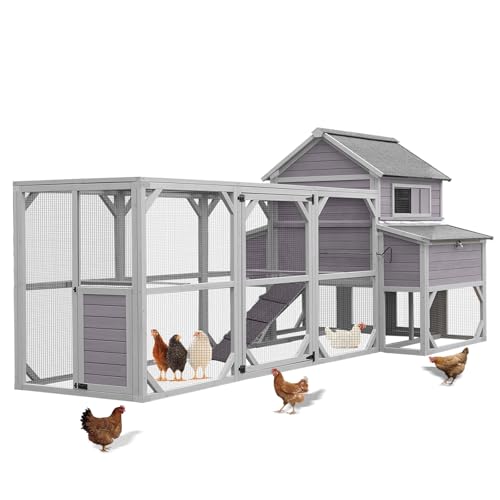
The Aivituvin Extra Large is the top pick here because it answers the walk-in question in the form most backyard keepers actually need: a coop combined with a run in one long structure, sized for a flock of eight to twelve chickens. As stated on the listing, it measures 134.5 inches long and 62.4 inches high. That length matters as much as the height. A coop and run stretched along one line gives the birds a sheltered house at one end and open-air space along the rest, and it gives the keeper a single structure to site, level and maintain rather than a house and a separate pen that have to be joined, aligned and predator-proofed at the seam.
The height figure deserves an honest reading. At 62.4 inches, this is walk-in height for most adults when stooped, or working at the run door, rather than full standing height in the middle of the house. For the jobs that dominate coop keeping, that is usually enough. The keeper can step in rather than crawl, reach the far corners with a rake, lift out a feeder without folding double, and catch a hen without lying across the threshold. Keepers who are tall, or who have a bad back and cannot work stooped even briefly, should read the height figure carefully and compare it with the taller model below before deciding, because the difference between stooped access and standing access is the single biggest ergonomic difference between the two coops in this guide.
Capacity is the other headline figure: the listing sizes this coop for eight to twelve chickens. That range is a sensible size for a household flock that supplies eggs daily with some surplus, and it is large enough that the birds have room to move between house and run without crowding at the door. As with any coop, the stated capacity assumes the birds also use the run during the day; a flock kept shut in the house portion for long stretches needs more house space per bird than a flock that ranges the run from dawn. Keepers near the top of the range should plan the siting so the run portion sits on ground that drains, because twelve hens on wet ground will churn a run surface faster than eight.
Because the verified listing information for this model centres on its dimensions, capacity and combined coop-and-run format, the sensible way to choose it is on exactly those points: length that suits a long, narrow site along a fence or wall, a flock in the eight-to-twelve range, and a keeper content to work slightly stooped at the door. Check the current listing for the details that listings update most often, and measure the intended site against the 134.5-inch length before ordering, including room to walk around the structure for maintenance.
Specs
– Model: Aivituvin Extra Large Chicken Coop
– Flock size: 8–12 chickens, as stated on the listing
– Length: 134.5 inches, as stated on the listing
– Height: 62.4 inches, as stated on the listing
– Format: Coop with run, as stated on the listing
Pros
– Combined coop and run in one structure, so house and outdoor space are sited together
– Sized for eight to twelve chickens, covering most household flocks
– Walk-in access at the door for cleaning, feeding and catching birds
– Long footprint suits narrow sites along a fence, wall or hedge
Cons
– At 62.4 inches high, taller keepers work stooped rather than fully upright
– The long footprint needs a level run of ground over eleven feet
OverEZ Classic Large Chicken Coop
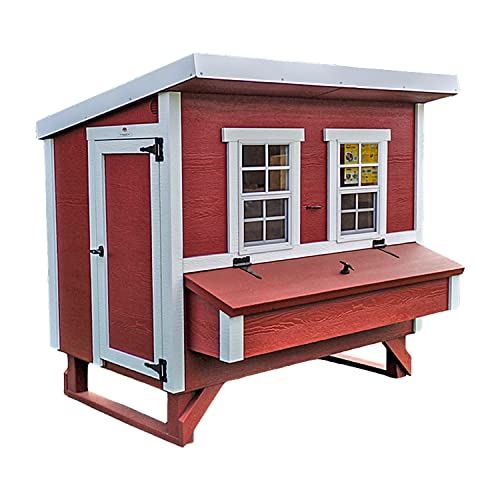
The OverEZ Classic Large is the runner-up, and the pick for keepers who put standing height first. As recorded from the listing information available for this guide, it houses up to fifteen chickens and measures 74 × 60 × 72.5 inches. That last figure is the important one: 72.5 inches is true walk-in height, enough for most adults to stand upright inside the coop. For a keeper who cleans out weekly, spends time inside with the birds, or simply cannot work bent over, that difference is not a luxury. It changes the coop from a structure that is serviced from the doorway into a small building that is worked in from inside, with room to turn, carry a bucket, and use a full-size rake or fork without stooping.
The capacity, up to fifteen chickens, puts it at the top of the backyard range and into smallholding territory. Fifteen laying hens produce a substantial daily egg supply and a substantial amount of manure and bedding turnover to go with it, so the standing height and the interior volume work together: a flock that size in a low coop would be miserable to clean, while in a tall coop the keeper can work through the bedding systematically. The footprint, 74 by 60 inches, is far more compact in plan than the long Aivituvin, which makes this the easier of the two to fit into a square corner of a yard, a paddock edge or a garden plot where a long structure would not sit well.
The figure that demands the most planning is the weight: around 600 pounds, as recorded for this guide. A coop of that weight is not a seasonal item that gets dragged to fresh ground by two people on a Saturday. It arrives as a serious structure, it needs a prepared, level base that can carry it without settling unevenly, and once it is sited it should be treated as permanent. That permanence has an upside — a heavy coop sits solidly in wind, resists being shifted by animals pushing at it, and feels like a building rather than a kit — but it means the siting decision has to be right the first time. Think through sun, drainage, distance from the house and the route for bedding and feed before it is placed, because moving it later is a project in itself.
Two honesty points belong with this pick. First, the listing evidence for this model rests on thinner sources than the top pick, so a careful check of the live Amazon listing before ordering is essential: confirm the dimensions, the capacity and the weight on the page itself. Second, this is a coop, and it should not be confused with a run-only product. A walk-in run without a house is a different purchase — it gives sheltered outdoor space but nowhere enclosed for roosting and laying — and it is deliberately not treated as an alternative here. The Classic Large is recorded as made in the USA by Amish craftsmen, which will matter to keepers who prefer a domestically built structure and are prepared to site a heavy, long-term coop.
Specs
– Model: OverEZ Classic Large Chicken Coop
– Flock size: Up to 15 chickens, as recorded for this guide
– Dimensions: 74 × 60 × 72.5 inches, as recorded for this guide
– Weight: Around 600 lb, as recorded for this guide
– Origin: Amish-made in the USA, as recorded for this guide
Pros
– True walk-in height at 72.5 inches, so most adults stand upright inside
– Rated for up to fifteen chickens, the larger capacity in this guide
– Compact square footprint suits corners and smaller plots
– Heavy, permanent construction that sits solidly once sited
Cons
– Around 600 lb, so it needs a prepared base and is effectively permanent once placed
– Listing evidence is thinner than for the top pick, so the live listing needs a careful check before ordering
How to Choose
Start with the flock, because capacity decides the shortlist before anything else. Count the hens you have now, then count the hens you honestly expect to have after the next spring, because flocks grow. A keeper with six hens and no plans to expand is served by the smaller end of the Aivituvin range with room to spare. A keeper with twelve hens, or ten hens and a plan to add pullets, is at the ceiling of the Aivituvin and should look at the OverEZ, whose fifteen-bird capacity leaves headroom. Buying a coop exactly at its stated capacity leaves no slack for a broody hen raising chicks, a spare bird taken in from a neighbour, or the simple fact that stated capacities assume the birds also use outdoor space during the day.
Next, be honest about height, because it is the defining feature of this category. A walk-in coop is bought so a person can get inside it. Measure yourself, not just the coop. A height around 62 inches suits a keeper who is content to duck through the door and work slightly stooped at the threshold and along the run. A height of 72.5 inches suits a keeper who wants to stand upright in the middle of the house with a rake in hand. Neither is wrong, but they are different working experiences, and the keeper who cleans out every week for ten years will feel the difference in their back. If more than one person tends the flock, judge the height against the taller of them.
Then look at the shape of the site. The two coops in this guide occupy ground in opposite ways. The Aivituvin stretches 134.5 inches in a line, which suits a long boundary, the side of a barn or a strip beside a garden, and it combines the run into that length. The OverEZ occupies a roughly square 74 by 60 inch patch, which suits a corner or a paddock edge, but its birds’ outdoor space has to be considered separately from the house footprint. Walk the site with a tape before choosing: check the length or the square is genuinely available, that the ground can be levelled, and that there is room to walk around the structure, because a coop pushed tight against a fence on every side cannot be cleaned, repaired or inspected from outside either.
Weight and permanence come next. A lighter combined coop and run can be shifted with help if the ground under it becomes worn or the layout of the yard changes. A coop of around 600 pounds cannot, in any practical sense. For the heavy coop, prepare the base as you would for a small shed: level, drained, and firm enough that the structure does not settle into a twist that jams the doors. Think about delivery access too — how the structure reaches its site, through which gate, and across what ground — before it is ordered rather than after it arrives.
Also consider how the coop will be cleaned, because walk-in access changes the method as well as the posture. Inside a tall coop the keeper can work with full-size tools — a yard rake for bedding, a fork for compacted litter, a bucket carried in and set down — rather than the hand tools and short scrapers that low houses force. Bedding can be turned, topped up or stripped in sections while the birds move to the other end, instead of every clean-out becoming an eviction.
Finally, think about the working routine the coop has to support. The keeper will enter it in the dark in winter, in rain, and with hands full of feed or water. A door that can be worked with one hand, a threshold that does not trip, and enough interior room to set a bucket down inside the door all matter more in February than any feature admired in a photograph. A walk-in coop earns its keep on the worst mornings, not the best ones, so choose the model whose height, capacity and footprint match the routine you actually keep, on the site you actually have.
FAQs
What makes a chicken coop a walk-in coop?
Height and access. A walk-in coop is tall enough for an adult to enter through a door and work inside — standing upright in the tallest designs, or stooped at the door in lower ones like the 62.4-inch Aivituvin in this guide. Low hutches and raised houses with small hatches are not walk-in coops, however they are labelled, because the keeper cannot get inside them. The OverEZ Classic Large, at 72.5 inches high, gives true standing height; the Aivituvin gives walk-in access at a lower, stooped working height.
How many chickens can these walk-in coops hold?
As stated for the models in this guide, the Aivituvin Extra Large is sized for eight to twelve chickens, and the OverEZ Classic Large houses up to fifteen chickens. Treat the top of any stated range as a ceiling rather than a target: the figures assume the birds also use outdoor run space during the day, so a flock shut inside for long periods needs more room per bird. Leaving headroom below the stated maximum is kinder to the birds and easier to keep clean.
Where should a walk-in coop be sited?
On level, well-drained ground that the keeper can reach easily in all weather, with room to walk around the structure for cleaning and inspection. A long coop such as the Aivituvin needs an eleven-foot level run, which suits a boundary or wall. A heavy coop such as the OverEZ, at around 600 pounds, needs a prepared base and should be treated as permanent once placed, so its position — sun, drainage, distance from the house and the route for feed and bedding — should be settled before it is sited.
Conclusion
For most keepers, the Aivituvin Extra Large is the top pick: a combined coop and run, 134.5 inches long, sized for eight to twelve chickens, with walk-in access at 62.4 inches high for cleaning, feeding and catching birds without crawling. The OverEZ Classic Large is the runner-up and the better choice where standing height and capacity lead the decision — up to fifteen chickens, 72.5 inches of genuine walk-in height, and a heavy, permanent build on a compact square footprint, with the caveat that its live listing should be checked carefully before ordering. Judge the two on flock size, your own height, and the shape of the ground available, and either will give you the thing this category exists for: a coop you can step inside and work in properly.